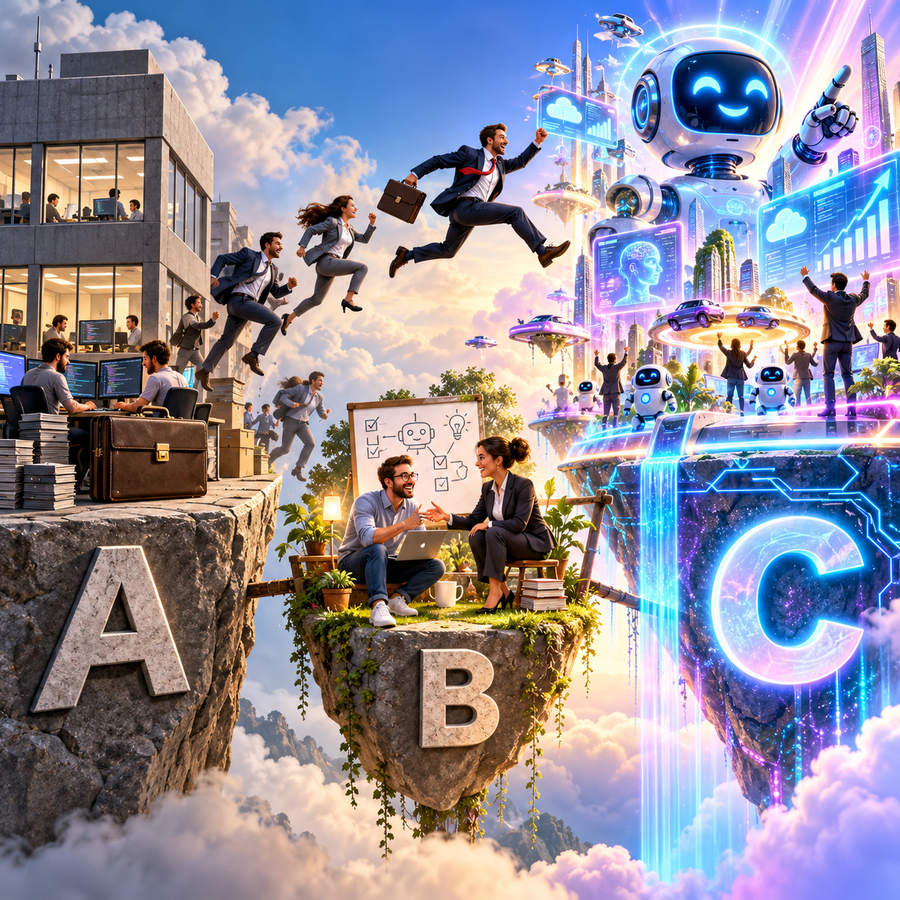
AI is making it easier than ever to build software, automate processes, and reduce costs. And I believe in its potential. We're developing our own AI at Zorn Novum.
But I keep wondering, are we actually solving more problems, or just producing things faster?
Think about a business owner who needs software.
A: Hire a traditional software development company.
C: Subscribe to an AI-powered SaaS platform and let an agent build it.
But where's B?
What about working with someone who understands AI, knows its limitations, and takes the time to understand what the customer actually needs?
There's a saying I use often: “We don't know what we don't know.”
Here's a simple example.
What color is the carpet in my living room?
You don't know. But before I asked, you didn't even know that was something you didn't know.
Now think about how many questions a business owner might not know to ask when developing software.
That's where experience matters.
I compare AI to a hammer. We've improved hammers for generations. Better handles, magnetic nail holders, additional features.
But it's still a hammer. You wouldn't use one to determine whether your floor is level.
The same goes for AI. It's an incredible tool, but understanding its limitations is just as important as understanding its capabilities.
I'm not against SaaS or automation. We need to keep innovating and moving forward. But removing people to reduce overhead doesn't automatically mean we're creating better solutions.
And here's something else I've been thinking about.
We see labels everywhere saying “AI-generated.”
Well, AI helped me write this post.
I've gone through multiple prompts, shared my thoughts, added examples, challenged the wording, and revised it.
Every idea here is mine. AI helped me organize those ideas and communicate them more clearly.
Does that make it any less my writing?
Maybe we should start distinguishing between “AI-generated” and “AI-assisted, human-reviewed.”
That's part of the philosophy behind what we're building at Zorn Novum. Using AI to make people more capable, not removing the experience, judgment, and accountability they bring.
The future doesn't have to be a choice between artificial intelligence and human expertise.
Maybe we've been so focused on getting from A to C that we've overlooked the opportunities at B.